Thursday, 11 January 2024

Oh Jerusalem,.the city of sorrow Reading poems

Hello readers!!

I am Divya jadav a student of English Department at MKBU. In this blog  I would like to explain the poem " Oh Jerusalem, the city of sorrow " by Nizar Qubbani. Here  I   will explain how the poem deal with I.A.Richard practical criticism regarding figurative language 

For the deep reading or understanding of the practical criticism go through this link practical criticism

"Oh Jerusalem, the city of sorrow"

Oh Jerusalem, the city of sorrow
A big tear wandering in the eye
Who will halt the aggression
On you, the pearl of religions?
Who will wash your bloody walls?
Who will safeguard the Bible?
Who will rescue the Quran?
Who will save Christ, From those who have killed Christ?
Who will save man?

πŸ‘‰Various questions that arised during reading the poem are :

1) In the poem 'Pearl of religions'  means?

2) why the poet entitled 'city of sorrow' only?

3)who are the safeguard?

4) who will killed the Christ?

5) Who will save Christ?


Literary analysis of the poem:-

The poem reflects the challenges which faced by the city of Jerusalem. The sorrow tone refer to Jerusalem as the 'city of sorrow' and the tear wandering in eye it's emphasizing the pain distress associated with the city. The another line address aggression faced by Jerusalem.poet evokes religious symbols refering Bible, Quran and Christ. The poet express the cultural and historical heritage of Jerusalem. The 'bloody walls' implies the violence that has affected the city physical and cultural landscape. The last line Jerusalem! My love, My town conveys a personal connections and love for city. 

The Aim of poet:-
This poem reflects on the challenges and conflicts in Jerusalem, emphasizing the need for protection of religious symbols and a plea for peace. The poet seeks answers to who will address the aggression, preserve sacred texts, and save humanity from the violence depicted. The aim appears to be a call for harmony and safeguarding the city's rich religious heritage.


Thank you....


Wednesday, 10 January 2024


       Hello learners!  I am a student.  This blog is part of thinking activity assigned to understanding of Zeitgeist of 20th century from Modern Times BothCharlie Chaplin are best example of 20th century society . This movies has some special characteristic  discuss.

Monday, 8 January 2024

Understanding Zeitgeist of the 20th Century: From Modern Times


Hello readers!!


Understanding Zeitgeist of the 20th Century: From Modern Times 

I am Divya jadav a student of English Department at MKBU and This blog is prepared as a part of a thinking activity to understand the Zeitgeist of the 20th Century: In Morden Times.

Introduction of film:-
"Modern Times" is a classic silent comedy film written and directed by Charlie Chaplin, released in 1936. Chaplin stars as the iconic Little Tramp character, navigating the challenges of the modern industrialized world. The film cleverly satirizes the dehumanizing effects of technology and industry while delivering Chaplin's signature blend of humor and social commentary. Despite being a silent film, "Modern Times" remains a timeless and influential masterpiece in cinematic history.

The term "silent film" is something of a misnomer, as these films were almost always accompanied by live sounds.

Overview of 20th century:-

The 20th century was a period of profound global transformation marked by significant events and cultural shifts. It began in 1900 and concluded in 2000. The 20th century left a lasting impact on the world, shaping the modern era in terms of politics, technology, culture, and social norms.


Social Commentary: 
The film provides a timeless critique of industrialization, dehumanization, and the challenges of modernity. Its social commentary on the impact of technology and mechanization on human lives remains relevant in today's highly automated and technologically driven world.

Humanity and Resilience: 
Chaplin's portrayal of the Little Tramp highlights the resilience of the human spirit in the face of adversity. This theme resonates across generations, serving as a reminder of the importance of maintaining humanity and compassion in the midst of rapid societal changes.

Satire and Humor: 
The film's humor and satire have a universal quality that transcends cultural and temporal boundaries. Chaplin's comedic elements serve as a powerful means to convey deeper messages about societal issues, making it accessible and engaging for audiences across different eras.

Workplace Issues: 
The challenges faced by the characters in the film, particularly in the workplace, address issues such as job automation, worker exploitation, and the pursuit of efficiency at the expense of individual well-being. These themes continue to be relevant in discussions about labor and employment in the contemporary world.

Cinematic Innovation: 

"Modern Times" showcases Chaplin's innovative approach to filmmaking, blending slapstick comedy with social commentary. Its influence can be seen in later works, contributing to the evolution of cinematic storytelling.


In summary, "Modern Times" endures as a cultural touchstone because of its insightful social critique, timeless humor, and the universal themes it explores. It remains a relevant and influential work that continues to resonate with audiences, making it an important piece of cinematic history in modern times.


Thankyou..


T. S . Elliot Tradition and Individual Talent

Hello readers!!
I am Divya jadav a student of English Department at MKBU. In this blog I will explain the Eliot " Tradition and the Individual Talent" .

πŸ‘‰ T.S.Eliot the great critic.:-


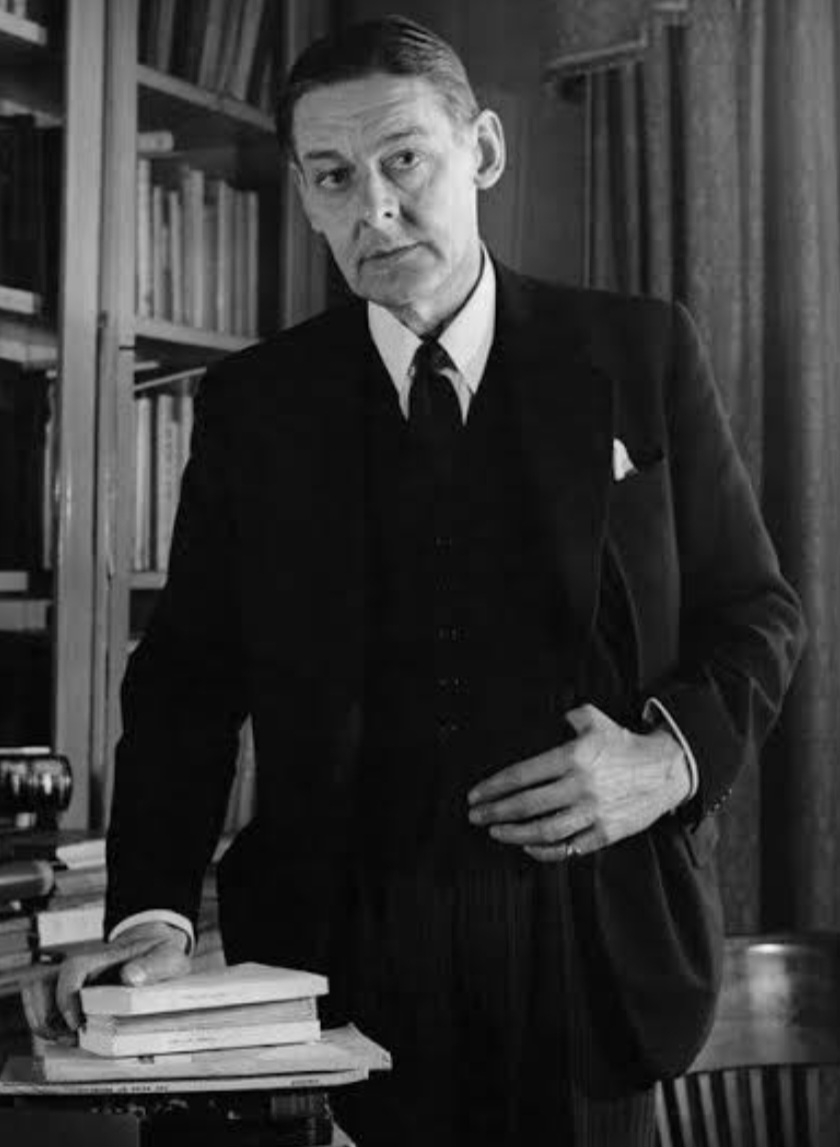
T.S. Eliot was a prominent poet, essayist, and playwright of the 20th century. He was born in 1888 in the United States but later became a British citizen. Eliot's poetry, including works like "The Waste Land" and "The Love Song of J. Alfred Prufrock," revolutionized modernist literature with its complex themes, innovative style, and profound cultural commentary. Beyond his poetry, Eliot's essays, such as "Tradition and the Individual Talent," also significantly influenced literary criticism. He received the Nobel Prize in Literature in 1948 for his immense contribution to literature.


πŸ‘‰T. S . Eliot "Tradition and the Individual Talent":-

Tradition and the Individual Talent" is an essay by T.S. Eliot that was first published in 1919. In this influential piece, Eliot discusses the relationship between tradition and creativity in literature. He emphasizes how an artist's work is shaped by the literary tradition that precedes them and argues that the individual talent of an artist should not be viewed in isolation but in connection to the broader historical and cultural context. 


πŸ‘‰What is the relationship between ' Traditiona' and Individual Talent ' according to the Eliot:-

In "Tradition and the Individual Talent," T.S. Eliot explores the dynamic relationship between tradition and the creative process. He argues that genuine artistic creation involves a profound engagement with the cultural and literary tradition that precedes the artist. According to Eliot, the poet must be aware of and connected to the literary heritage, assimilating the collective wisdom of the past.

Eliot introduces the concept of the "historical sense," emphasizing the importance of understanding literary history to produce meaningful work. He contends that the poet's mind is a medium where past and present intersect, and true originality arises from a conscious and transformative interaction with tradition.
Free

πŸ‘‰ Explain honest criticism and  sensitive appreciation are directed not upon the poet but upon the poetry:-

In T.S. Eliot's essay "Tradition and the Individual Talent," he argues that honest criticism and sensitive appreciation should be directed towards the poetry rather than the poet. Eliot emphasizes the importance of considering poetry as an ongoing tradition, where each new work contributes to and transforms the existing body of literary work.

According to Eliot, the poet's personality and emotions should not overshadow the poetic creation. Honest criticism involves objectively analyzing the artistic elements, form, and style of the poem. Sensitive appreciation, in Eliot's view, means understanding and valuing the poem for its unique contribution to the broader literary tradition, recognizing how it connects with and alters the existing cultural and artistic context.

By focusing on the poetry rather than the poet, Eliot encourages a more objective and forward-looking approach to literary evaluation, emphasizing the continuous evolution of poetic expression within a larger historical and cultural framework.


πŸ‘‰How would you like to explain Eliot 's theory of ' depersonalization'  you can explain with the help of chemical reactions in the presence of catalyst agent ,platinum :-

T.S. Eliot's theory of depersonalization in poetry suggests that poets should distance themselves from personal emotions and experiences. This detachment allows them to adopt a more objective and universal perspective, creating works that resonate beyond individual sentiments and speak to broader human experiences. It emphasizes a shift from the intensely personal to a more impersonal and timeless expression in literature.

πŸ‘‰ Explain ' poetry is a not  turning  loose of emotions , but  an escape from emotion ,it is not an expression of personality write two of points one can which one can which the critique of T. S. Eliot as a critic:-


1)Objective Detachment: 
T.S. Eliot, as a critic, emphasizes the idea that poetry should not be a mere outpouring of raw emotions but rather an escape from excessive emotional subjectivity. He advocates for a more objective and detached approach to poetry, where the poet transcends personal feelings to create a work with universal significance.

2)Impersonality in Expression: 
Eliot challenges the conventional notion that poetry is a direct expression of the poet's personality. Instead, he contends that effective poetry involves a certain level of impersonality, where the poet uses language as a medium to communicate deeper and broader human experiences, distancing the work from being solely tied to the poet's individual emotions.


Thank you
 
References: ChatGPT 

Sunday, 7 January 2024

Frame study of The Great Dictator by Charlie Chaplin

Hello readers !!

Understanding Zeitgeist of the 20th Century: From Modern Times to the era of Great Dictators
I am Divya jadav a student of English Department at MKBU and This blog is prepared as a part of a thinking activity to understand the Zeitgeist of the 20th Century: From Modern Times to the Era of Great Dictators. 


πŸ‘‰ Introduction of the film : 

To the Great Dictator" is a classic 1940 satirical comedy-drama film written, directed, and starring Charlie Chaplin. The film is a political satire that lampoons Adolf Hitler and Benito Mussolini. Chaplin plays dual roles, portraying a Jewish barber and a dictator resembling Hitler. Released during the early days of World War II, the film delivers apowerful anti-fascist message and remains a significant cinematic work addressing thesocio-political issues of its time.


πŸ‘‰The various aspects of Frames in the "Great Dictator ":

While we discuss about the frame study in the film ' The Great Dictator ' in which we find various aspects are.


1) World War :-

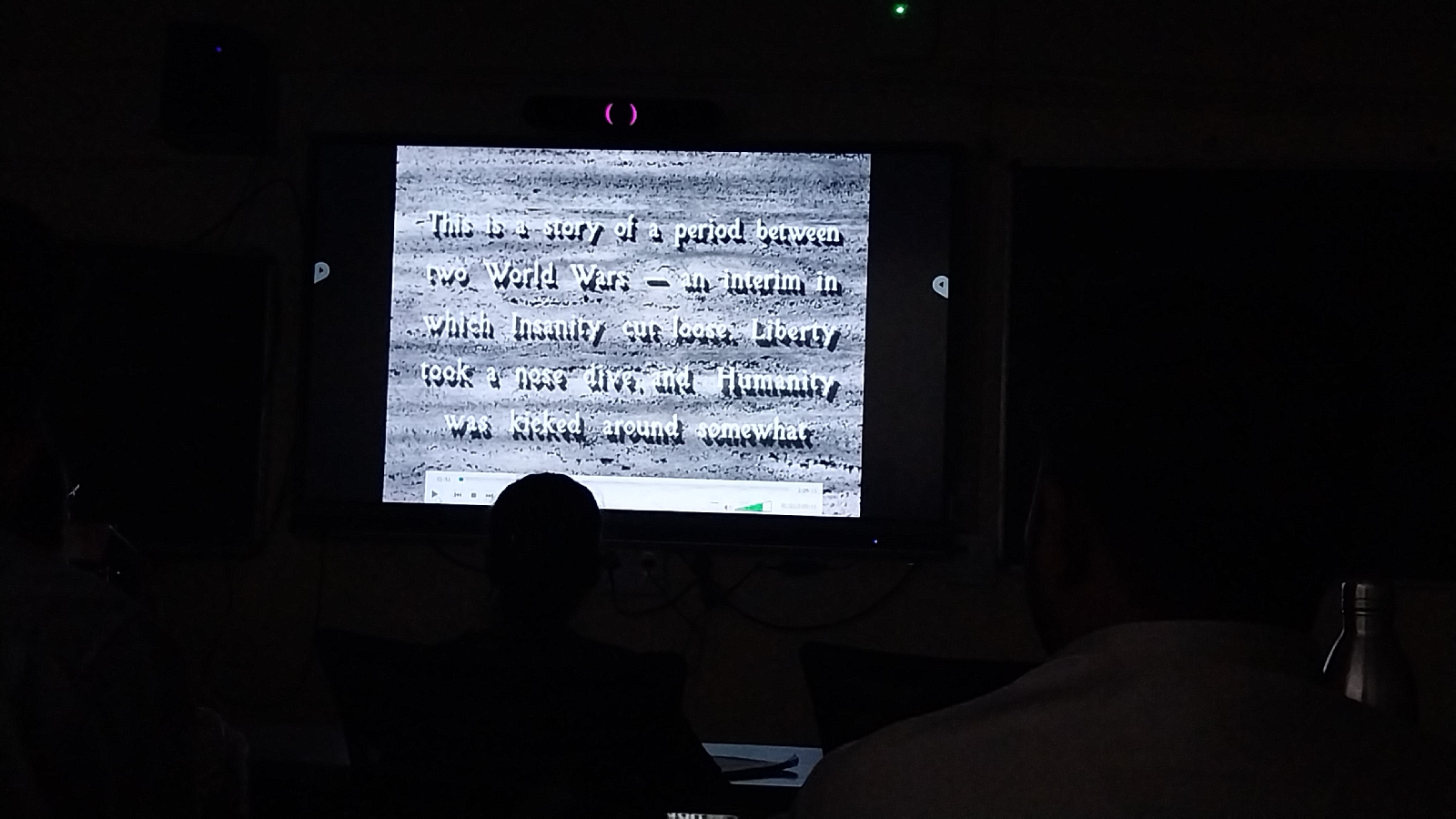
The movie reflects the tensions and concerns of the time, with the threat of war looming in Europe. The film's satirical elements and commentary on fascism highlight the broader context of the impending conflict that eventually led to World War II.It might also represent the technological advancements in warfare or the threat posed by such weaponry.


2) Dictatorship:-


"The Great Dictator" satirizes dictatorship and totalitarianism, particularly the regime led by the character Adenoid Hynkel, played by Charlie Chaplin. The film mocks the authoritarian nature of such leaders, highlighting their arrogance, cruelty, and absurdity. Chaplin's portrayal serves as a commentary on the real-life dictatorships of the time, particularly Adolf Hitler's regime in Nazi Germany. 


The film uses humor and satire to criticize the dangers and consequences of unchecked power and the impact of dictatorship on society.
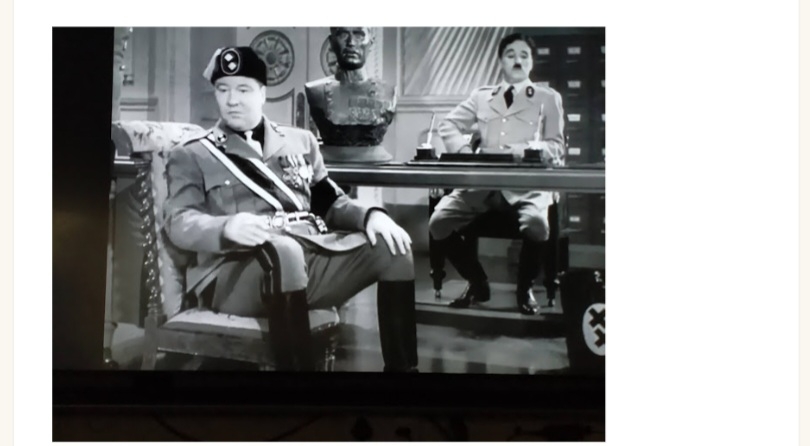
In the Above frame, there is the idea of Exhibitionism. We find the disrespect of art and  their artists also.

The another important scene of Hynkel seated on a high chair symbolizes his authority, power, and dominance within the hierarchy. It portrays his elevated status and control over the situation. In contrast, Napolini seated on a lower seat represents subordination or inferiority in this power dynamic. It emphasizes a deliberate positioning to showcase the imbalance of power, where one figure is visibly elevated, exerting control and superiority over the other, who appears subservient or diminished in influence. 


3) Propaganda :-


The Great Dictator" satirizes and critiques propaganda, especially that employed by totalitarian regimes. Some notable elements of propaganda in the film include:

Symbolism: The use of symbols, such as the double-cross emblem of the fictional country Tomainia, mimics the symbolic imagery associated with Nazi Germany.

Nationalism: The film exaggerates nationalist fervor through Hynkel's speeches and rallies, highlighting the manipulation of patriotic sentiment for political gain.

Dehumanization: The dehumanization of certain groups is depicted, reflecting the real-world tactics used by dictators to justify discrimination and persecution.
Charismatic Leadership: Adenoid Hynkel's charismatic and bombastic leadership style mirrors the cult of personality cultivated by real-world dictators.

By portraying these elements in a comedic and exaggerated manner, Chaplin exposes the dangerous and manipulative nature of propaganda.


Thank you...

References: ChatGPT

Sunday, 10 December 2023

MOVIE REVIEW

4 October,2023

Hello readers!!
I am Divya Jadav a student of English Department at MKBU. This blog is assigned by Megha ma'am . Here , I would like to share some different ideas or views about the two movies are:

1)Marry Shelly's "FRENKENSTEIN" 
2)Jane Austen's"PRIDE AND PREJUDICE .
 
1)MARRY SHELLY 'S  FRENKENSTEIN", A 1994 SCIENCE  FICTION HORROR FILM  DIRECTED  BY KENNETH  BRANGAH.

The 1994 film adaptation of Mary Shelley's "Frankenstein," directed by Kenneth Branagh, is titled "Mary Shelley's Frankenstein." Here's a brief overview of this particular adaptation:

Title:  

Mary Shelley's Frankenstein (1994) Director: Kenneth Branagh Starring: Kenneth Branagh (Dr. Victor Frankenstein), Robert De Niro (The Creature), Helena Bonham Carter (Elizabeth Frankenstein), and others.

IDENTIFY THE CHARACTERS :
 Here, are the name of the characters they are playing important role which we can easily understand.

1. Robert De Niro as the creature. 

2. Helena Bonham as the Elizabeth Lavenza Frankenstein. 

3. Kenneth Branagh as Victor Frankenstein. 

4. Tom Hulce as Henry Clerval .

5. Helena Bonham Carter as Elizabeth Lavenza.

6. Ian Holm as Baron Alphonse Frankenstein.

7. John Cleese as Professor Waldman.

8. Aidan Quinn as Captain Robert Walton..

9.Richard Briers as blind Grandfather.

10.Robert Hardy as Professor Krempe.

11. Cherie Lunghi as Carol


Synopsis: 

Mary Shelley's Frankenstein" is a faithful adaptation of the classic novel, with Kenneth Branagh both directing and starring as Dr. Victor Frankenstein. The film explores the story of Victor Frankenstein and his ambitious experiment to create life from dead body parts. After successfully bringing the Creature
to life, Frankenstein is faced with the moral and ethical consequences of his actions.

Review:
Kenneth Branagh's adaptation is known for its lavish production design and its emphasis on the emotional turmoil of the characters, particularly Victor Frankenstein and the Creature. The film explores themes of scientific hubris, the pursuit of knowledge, and the consequences of playing god.

While praised for its fidelity to the source material and its strong performances, "Mary Shelley's Frankenstein" received mixed reviews from critics. Some appreciated its Gothic atmosphere and exploration of moral dilemmas, while others found fault with its pacing and deviations from the novel.

CONCLUSION:

Overall, "Mary Shelley's Frankenstein" is considered a visually striking and emotionally charged adaptation of the classic novel. It offers a fresh perspective on the characters and themes, making it worth watching for fans of the Frankenstein story and those interested in the moral and philosophical questions.


2 )" PRIDE AND PREJUDICE " ,A 2005 ROMANTIC DRAMA FILM DIRECTED BY JOE WRIGHT.

INTRODUCTION: 

"Pride & Prejudice" is a 2005 romantic drama film directed by Joe Wright, based on Jane Austen's classic novel of the same name.Joe Wright's 2005 adaptation Pride & Prejudice had more differences from the Jane Austen novel .than just changing the time period, making the film more realistic and romantic in the process. Starring Keira Knightley as Elizabeth Bennet and Matthew Macfadyen as Mr. Darcy, the film took a more romantic approach to the novel, grounded in realism, that turned Pride & Prejudice into a critical success for blending traditional period-film traits with a modern approach.Here's an overview of the film:

Title: 

Pride & Prejudice (2005) Director: Joe Wright Starring: Keira Knightley (Elizabeth Bennet), Matthew Macfadyen (Mr. Darcy), Donald Sutherland (Mr. Bennet), and others.

Synopsis:

"Pride & Prejudice" is a period drama set in early 19th-century England. It follows the story of Elizabeth Bennet, the spirited and intelligent second daughter of Mr. and Mrs. Bennet. Elizabeth's life takes a turn when she meets the enigmatic and wealthy Mr. Darcy. Initially, they clash due to their differing social backgrounds and misunderstandings, but as the story unfolds, they navigate pride, prejudice, and societal expectations to find love.

Review: 
Joe Wright's adaptation of "Pride & Prejudice" is widely praised for its faithful interpretation of Jane Austen's novel and its strong performances. Keira Knightley shines as the independent and headstrong Elizabeth Bennet, while Matthew Macfadyen brings a brooding and complex Mr. Darcy to life.

The film captures the beauty of the English countryside and the elegance of the Regency era, creating a visually stunning backdrop for the unfolding romance. The screenplay, adapted by Deborah Moggach, maintains much of Austen's sharp wit and social commentary.

It’s widely regarded as one of the most faithful adaptations and often rivals Pride and Prejudice 2005 as the best Jane Austen adaptation.


Thankyou for visiting.....πŸ’πŸ’

Sunday, 26 November 2023

Assignment 102: Samuel Richardson and Epistolary Novel

Hello readers!!

I am Divya jadav a student of English Department at MKBU. This blog is part of Assignment writing for paper 102: Literature of Neo-classical period

       Samuel Richardson and Epistolary Novels


Table of contents:-

Personal Information

Assignment Details

Introduction

Early life of Samuel Richardson

Literary Career of Richardson

What is an Epistolary novel? 

Types of Epistolary Novel 

Epistolary novel and Richardson 

Conclusion

References


Personal Information:-

Name:- Divya Bharatbhai Jadav

Batch :- M.A.sem 1 ( 2023- 2025)

Email Address:- divyajadav5563@gmail. com

Roll number:- 8


Assignment Details:-

Topic:- Samuel Richardson and Epistolary Novel 

Paper:- Literature of Neo-classical Period 

Subject code:- 22393

Submitted to:- Sujata Binoy Gardi, Department of English, MKBU, Bhavnagar

Date of Submission:- 1 December 2023

About Assignment:- In this assignment I will explain about the Samuel Richardson and the Epistolary Novel


Introduction:

Outside of his writing career, Richardson was an established printer and publisher for most of his life and printed almost 500 different works and various journals and magazines.

During his printing career, Richardson was to experience the death of his first wife along with their five sons, and eventually remarry. Although with his second wife he had four daughters who lived to become adults, they never had a male heir to continue running the printing business. Although his print shop slowly faded away, his legacy was certain when, at the age of 51, he wrote his first novel and immediately became one of the most popular and admired writers of his time.

He was surrounded by some of the leading figures in 18th century England, including Samuel Johnson and Sarah Fielding. Although he was known by most members of thLondon literary community, he was rivals with Henry Fielding, and the two startedresponding to each other's literary styles in their own novels.


Early life:-


Richardson, one of nine siblings, was born in 1689 in Mackworth Derbyshire, to Samuel and Elizabeth Richardson. It is unsure where in Derbyshire he was born because Richardson always concealed the location.The older Richardson was, according to the younger:

"A very honest man, descended from a family of middling note, in the country of Surrey, but having for several generations a large number of children, the not large possessions were split and divided, so that he and his brothers were put to trades; and the sisters were married to tradesmen."

His mother, according to Richardson, "was also a good woman, of a family not ungenteel; but whose father and mother died in her infancy, within half-an-hour of each other, in the London pestilence of 1665".

The trade his father pursued was that of a joiner In describing his father's occupation, Richardson stated that "he was a good draughtsman and understood architecture", and it was suggested by Samuel Richardson's son-in-law that the senior Richardson was a cabinetmaker and an exporter of mahogany while working at Aldersgate-street. The abilities and position of his father brought him to the attention of James Scott, 1 st Duke of  Monmouth However this, as Richardson claims, was to Richardson senior's "great detriment" because of the loss of the Monmouth rebellion.which ended in the death of the Scott in 1685. After Scott's death, the elder Richardson was forced to abandon his business in London and live a modest life in Derbyshire.


Literary Career:-


Work continued to improve, and Richardson printed the Daily Journal between 1736 and 1737, and the Daily Gazetteer in 1738.During his time printing the Daily Journal, he was also printer to the "Society for the Encouragement of Learning'', a group that tried to help authors become independent from publishers, but collapsed soon after.In December 1738, Richardson's printing business was successful enough to allow him to lease a house in Fulham. This house, which would be Richardson's residence from 1739 to 1754, was later named "The Grange '' in 1836. In 1739, Richardson was asked by his friends Charles Rivington and John Osborn to write "a little volume of Letters, in a common style, on such subjects as might be of use to those country readers, who were unable to indict for themselves' '. While writing this volume, Richardson was inspired to write his first novel.


What is an Epistolary Novel?

Epistolary novel, a novel told through the medium of letters written by one or more of the characters. Originating with Samuel Richardson’s Pamela or Virtue rewarded , the story of a servant girl’s victorious struggle against her master’s attempts to seduce her, it was one of the earliest forms of novel to be developed and remained one of the most popular up to the 19th century. The epistolary novel’s reliance on subjective points of view makes it the forerunner of the modern Phychological novels.


An epistolary novel is also called a novel of letters, because the narration takes place in the form of letters, possibly journal entries and occasionally newspaper reports. An epistle is an archaic term for a letter. The epistolary novel is an interesting literary technique, because it allows a writer include multiple narrators in his or her story. This means the story can be told and interpreted from numerous viewpoints.

The epistolary novel as a genre became popular in the 18th century in the works of Samuel Richardson, with his immensely successful novels "Pamela"  and "Clarissa" 

Of these 18th century works, the most famous epistolary novels were those of Samuel Richardson. Both his novels Pamela and Clarissa were novels of letters. 


Types of Epistolary Novel:-

There are three types of epistolary novels:

1.Monologic :giving the letters of only one character, like 'Letters of a Portuguese Nun'

2.Dialogic: giving the letters of two characters, like Mme Marie Jeanne Riccoboni’s 'Letters of Fanni Butlers' .

3.Polylogic: with three or more letter-writing characters, such as in Bram Stoker’s Dracula In addition, a crucial element in polylogic Epistolary novels, like Clarissa and Dangerous Liaisons is the dramatic device of discrepant awareness’: the simultaneous but separate correspondences of the heroines and the villains creating dramatic tension.


Epistolary Novel and Samuel Richardson :-

Samuel Richardson an 18th-century English writer and printer .He is best known for his three Epistolary Novel:

" Pamela or Virtue rewarded (1740), "Clarissa or the History of Young Lady (1748)" The History of sir Charles Grandison"(1753).

Pamela, novel in epistolary style by  Samuel Richardson published in 1740 and based on a story about a servant and the man who,failing to seduce her, marries her. Pamela Andrew is a 15-year-old servant. On the death of her mistress, her mistress’s son, “Mr. B,” begins a series of stratagems designed to seduce her. These failing, he abducts her and ultimately threatens to rape her. Pamela resists, and soon afterward Mr. B offers marriage—an outcome that Richardson presents as a reward for her virtue. The second half of the novel shows Pamela winning over those who had disapproved of the misalliance.Pamela is often credited with being the first English novel. Although the validity of this claim depends on the definition of the term novel, Richardson was clearly innovative in his concentration on a single action.Pamela Andrews, fictional character, the virtuous, long-suffering heroine of Pamela (1740) by Samuel Richardson.


Clarissa, in full Clarissa; or, The History of a Young Lady, Epistolary Novel by Richardson.published in 1747–48. Among the longest English novels ever written , the book has secured a place in literary history for its tremendous psychological insight. Written in the then fashionable epistolary form, its main body consists of the letters of Clarissa  Harlow and her seducer,  Lovelace Clarissa, a young woman who expects to marry well, is gravely disappointed by her parents’ choice of suitor. The extremely wealthy, though ugly, Solmes is not Clarissa’s idea of a good match. Instead she is drawn to a man who is as dashing and fashionable as he is lacking in moral  character. He casts himself as Clarissa’s rescuer from her intended and dreaded marriage by whisking her off to the apparent safety and anonymity of London.

With Clarissa now isolated from her family and friends in the city, Lovelace is free to force his intentions upon her, despite her attempts to resist him. In Lovelace’s letters to his friend Belford, Richardson shows that what really drives his character to conquest and finally to rape is revenge for her family’s insults and his sense of Clarissa’s moral superiority. Neither recovers: Clarissa suffers temporary insanity, while Lovelace, sick with guilt, is killed in a duel.

The novel 's seeming narrative simplicity is not its strength; it is the sometimes devastating psychological insight that Richardson achieves that is its real fortΓ©. Like Marcel Pro’s Remembrance of Things Past , the sheer scale of Clarissa means that it can seem a novel that is more talked about than read. Yet for those readers who are prepared to spend time with it, Clarissa offers a proportionate amount of satisfaction.

The History of Sir Charlesrandison, epistolary novel by Samuel Richardson, published in seven volumes in 1754. The work was his last completed novel and it anticipated the novel of manner of such authors as Jane Austen.Sir Charles Grandison is a gallant nobleman known for his heroic intergity and magnanimity. He rescues the honourable Harriet Byron when she is kidnapped by Sir Hargrave Pollexfen, her spurned suitor. Eventually, Grandison and Byron fall in love.


Conclusion:-

Samuel Richardson is renowned for his contributions to the epistolary novel genre. His works, like "Pamela" and "Clarissa," use letters to unfold intricate narratives. Richardson's novels delve into complex characters, moral dilemmas, and social dynamics. The epistolary form allows readers to intimately connect with the characters, experiencing their emotions and conflicts firsthand. Richardson's impact on the novel genre, particularly through the exploration of human psychology and relationships, endures as a significant literary legacy.


References:-

https://www.britannica.com/biography/Samuel-Richardson


https://www.britannica.com/art/epistolary-novel


https://www.britannica.com/topic/Pamela-novel-by-Richardson


https://www.britannica.com/topic/Clarissa-novel-by-Richardson


https://www.britannica.com/topic/The-History-of-Sir-Charles-Grandison


(Words:1,631)

paper 206: African Literature

Hello readers!! This blog task is about Assignment writing on A Limited Woman: Character is in Question in Buchi Emecheta Novel ...